
Tesla's $29,990 Cybercab Really Costs $47,631: Here's the Fine Print
The price is under $30,000. The car won't move without a $299-a-month subscription, only works in five Texas cities, and you need Tesla's permission to sell it.
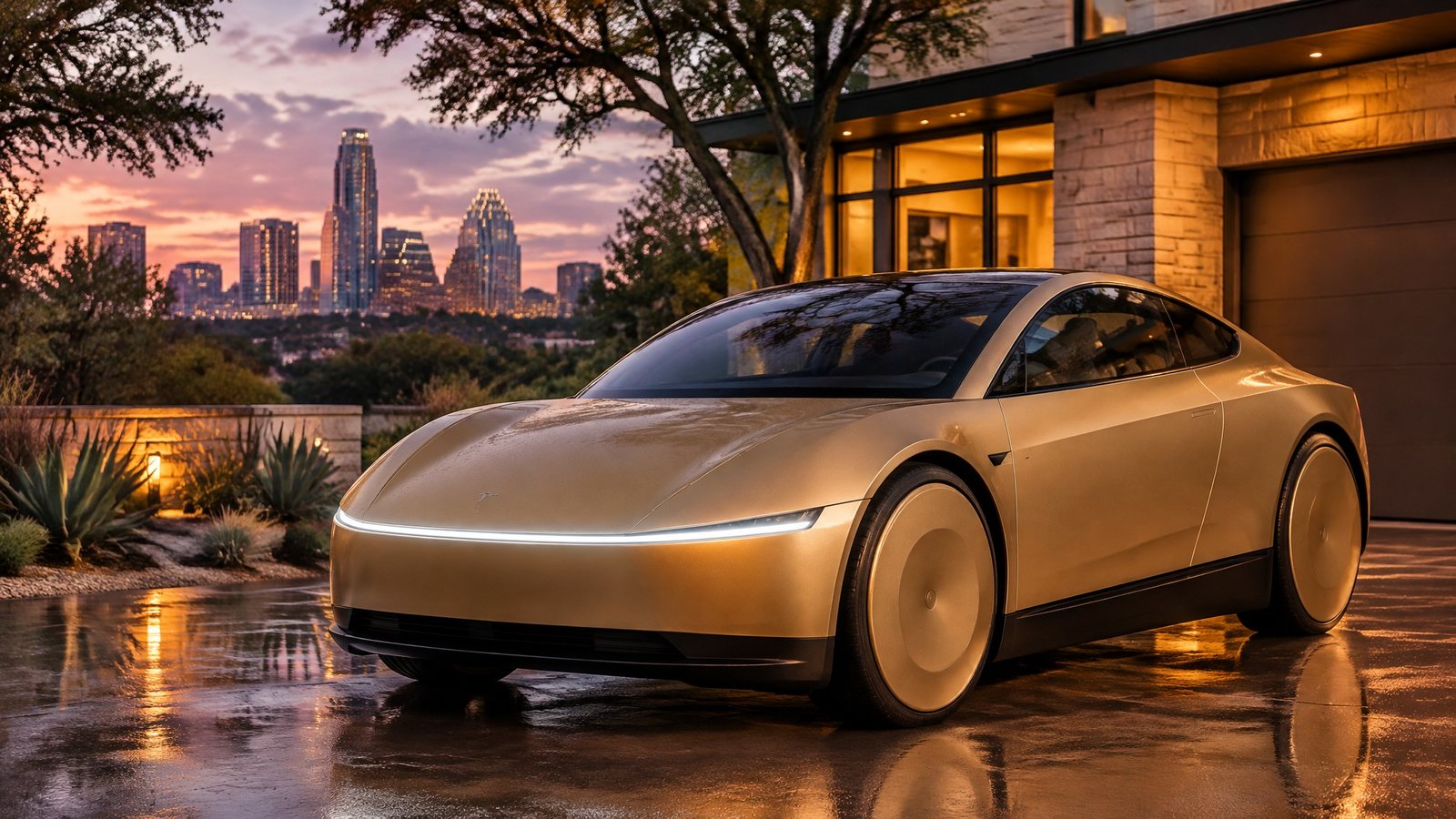
Tesla is selling a car with no steering wheel and no pedals for $29,990. That's the headline number, and it's real. But the number that matters is the one Tesla doesn't put on the order page: what the Cybercab costs you after five years. Based on Tesla's own purchase and subscription terms, that figure is $47,631, before insurance, registration or a single kilowatt-hour of charging.
Tesla opened Cybercab orders to private buyers on November 13 through its Robotaxi account. Orders are invite-only, require a $1,000 deposit that Tesla doesn't refund, and deliveries are estimated for December. Here's what the agreement actually says, and who this car makes sense for.
- Price
- $29,990
- Subscription
- $299/month (required)
- Deposit
- $1,000, non-refundable
- Seats
- 2
- Controls
- No steering wheel or pedals
- Where it works
- Tesla Robotaxi zones in Texas
- Deliveries
- Estimated December 2026
The car won't move without the subscription
The most important line in the whole deal comes straight from Tesla's agreement: "Your Cybercab will not operate without an active Autonomy Subscription."
That subscription costs $299 a month. The first month is free; after that, it's mandatory. On a regular Tesla, you can skip Full Self-Driving and simply drive the car yourself. The Cybercab has no wheel and no pedals, so if the subscription stops, the car stops.
There are other strings attached. Under the agreement, three "strikeouts" for unsafe use let Tesla switch off the self-driving for a week, with no refund for those days.
Even Elon Musk seems to think the fee is too high. He posted that "the monthly fee is too high" and suggested it should be closer to $115 a month. But that was a post on X. As of publication, the order page still says $299.
It only works where Tesla says it works
Tesla's agreement says the Cybercab is "operable only within Tesla-enabled Robotaxi geofences." Right now, that means Tesla's Texas Robotaxi cities: Austin, Dallas, Fort Worth, Houston and San Antonio. Those are also the only places Tesla will deliver one.
Owners don't control that map. Tesla says it "may expand, reduce, relocate, or otherwise modify the operating area at any time." If your neighborhood drops out of the zone, your car's world gets smaller. Musk has said nationwide availability is coming "as we receive regulatory approval," but there's no date attached to that.
“operable only within Tesla-enabled Robotaxi geofences”
The five-year math
Here's how the $47,631 figure breaks down, using the numbers in Tesla's terms:
- Purchase price: $29,990
- Subscription: $299 a month for 59 months (the first month is free) = $17,641
- Five-year total: $47,631, before insurance, registration and charging
For comparison, Tesla's cheapest Model Y was listed at $39,990 this year. Add Full Self-Driving at $99 a month for five years ($5,940) and you land around $45,930. For less money, that gets you five seats, a steering wheel, and a car that works outside Texas.
- Cybercab, 5 years
- $47,631
- Model Y + FSD, 5 years
- ≈$45,930
- Cybercab seats
- 2
- Model Y seats
- 5
- Cybercab drives outside Texas
- No
- Model Y drives outside Texas
- Yes
You pay for the car. Tesla keeps the keys.
The ownership rules go further than the subscription. According to Tesla's terms, as reported by Electrek, Not a Tesla App and others:
- No wraps, no window tint and no new wheels unless Tesla does the work.
- You can't rent the car out, and you can't put it on Tesla's own Robotaxi network.
- Selling it requires Tesla's written permission, or you face damages of at least $50,000.
- Tesla keeps the right to buy the car back, at a price Tesla sets.
Put together, it's closer to a long-term license than ownership in the usual sense.
The regulators are still looking
Cybercabs started carrying paying riders in Austin on September 3, and within a day federal safety regulators had opened an investigation. Not into a crash, but into paperwork: Tesla certified the Cybercab itself as meeting federal safety standards, and regulators wanted to know how much of that rested on Tesla deciding some rules don't apply to a car with no wheel, no pedals and no mirrors.
Amazon's robotaxi company, Zoox, took the other route and asked regulators for permission, receiving approval in July. In October, regulators also began reviewing a petition claiming Tesla's robotaxis speed through active school zones.
An investigation isn't a recall, and the service has kept running. But a private buyer would be taking delivery of a car whose certification is still under review, a risk a fleet operator can absorb far more easily than a single owner.
Why sell it to individuals at all?
Tesla's own words suggest personal ownership isn't the main plan. On the October earnings call, Musk said the Cybercab is "primarily going to be something that is offered as transport as a service." Tesla's Lars Moravy said the company was "trying to get to customers by the end of this year."
The timing has also drawn attention. Back in 2024, YouTuber Marques Brownlee bet that Tesla wouldn't get a Cybercab "publicly available for under thirty K by the end of twenty twenty-six." Tesla hit the price by $10, but invite-only orders and December deliveries leave the other two conditions open, and Brownlee has since ordered one himself. Electrek has argued Tesla is rushing the launch to beat that deadline; Tesla hasn't said so.
Tesla has changed prices before
In November 2019, Tesla unveiled the Cybertruck at a starting price of $39,900. When deliveries began four years later, the cheapest version cost $60,990, more than 50% higher. This month, Musk posted that Tesla will be "winding down production of the Cybertruck at Gigafactory Texas around the middle of next year to make room for increased Cybercab production."
This time the sticker price held. Tesla simply moved part of the cost into a monthly bill.
Who should actually buy one?
The Cybercab makes sense for a very specific buyer: someone who lives, works and spends weekends inside one of Tesla's Texas Robotaxi zones, never needs a third seat, will never sell, wrap or road-trip the car, and would rather be first than own something outright.
Everyone else should wait for two things: the subscription dropping toward the $115 Musk has floated, and the map expanding beyond Texas. If both happen, this becomes a very different car.
Sources
- Electrek: Tesla opens Cybercab orders with $299 subscription and geofence
- Electrek: Cybercab Autonomy Subscription agreement terms
- Not a Tesla App: Tesla opens Cybercab orders for personal use
- Drive Tesla Canada: First customer Cybercabs by end of 2026
- InsideEVs: Tesla Cybercab customer deliveries
- Motor1: Cybercab deliveries come with limited ownership
- Carscoops: Tesla opens Cybercab orders at $29,990
- iPhone 18 Pro and Pro Max Are Here: A Camera That Earns Its Price, and a Storage Tax That Doesn't
- Apple Watch Ultra 4 Review Roundup: Same $799, Same Body, a Very Different Watch Underneath
- Surprise and Shine: Sorting Apple's September 9 Rumors by How Real They Are
- Google Is About to Replace the Chromebook — Everything We Know About the Googlebook


