Apple MacBook Pro M4: The Laptop That Ran Out of Competition
Three chips — M4, M4 Pro, and M4 Max — each targeting a distinct tier of professional workload
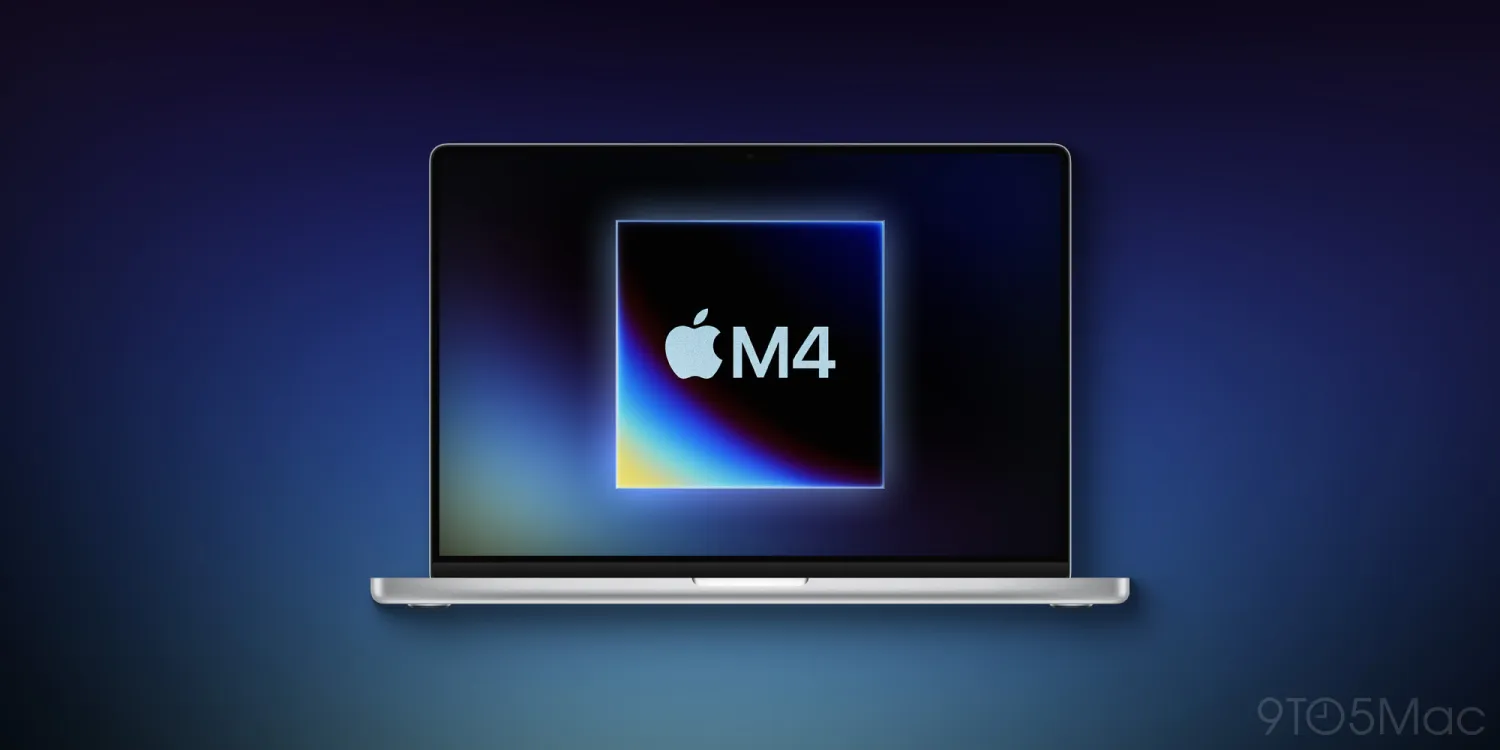
Apple has done it again — and this time, it has done it so thoroughly that the question of competition barely feels worth asking. The new MacBook Pro arrives with not one but three chips: the M4, M4 Pro, and M4 Max. Three tiers, three distinct audiences, three arguments for why the era of x86 laptops is not merely fading but finished.
Three Chips, One Clear Statement
Apple's tiered chip strategy is by now a familiar architecture — base chip for the mainstream, Pro for serious creatives, Max for those who once had no option but to buy a Mac Pro desktop. What makes the M4 generation different is not the structure of that hierarchy, but the sheer distance each tier has leapt over its predecessor.
The base M4 outperforms the previous generation M3 Pro in multi-core tasks — before you've even looked at the middle of the stack. The M4 Pro brings a 14-core CPU and 20-core GPU into a machine that still lasts all day. And the M4 Max reaches heights that, until very recently, were the exclusive territory of desktop workstations.
The M4 features a 10-core CPU, 10-core GPU, up to 32GB unified memory with 120 GB/s bandwidth. The M4 Pro steps up to a 14-core CPU, 20-core GPU, up to 64GB unified memory with 273 GB/s bandwidth. And the M4 Max delivers a 16-core CPU, 40-core GPU, up to 128GB unified memory with a staggering 546 GB/s bandwidth.
Apple claims the M4 delivers up to 1.8x faster CPU performance than the M3, and up to 2x faster GPU performance. Across the lineup, those gains compound — the M4 Max, Apple says, reaches performance levels previously only achievable on a Mac Pro desktop, at a fraction of the weight and power consumption.
The Number That Professionals Will Fixate On
For most users, chip benchmarks are abstract. For the professionals the M4 Max is targeting, one figure is anything but: 546 GB/s of memory bandwidth.
For video editors working in ProRes RAW, 3D artists running complex simulations, or machine learning engineers training models locally, memory bandwidth is frequently the actual bottleneck — not raw compute. It determines how quickly the processor can feed itself the data it needs to work. The M4 Max has, effectively, removed that ceiling for laptop users. This is no longer a machine that makes compromises to fit in a backpack.
The 128GB unified memory configuration — a first for any Apple laptop — compounds this further. Workflows that previously demanded a Mac Pro tower can now run on a machine thin enough to carry without noticing the weight difference from a regular notebook.
Twenty-Four Hours: A Battery Life Worth Believing
Battery life has always been one of Apple Silicon's most compelling calling cards, and the M4 generation pushes that advantage further still. The 16-inch MacBook Pro with M4 Pro is rated at up to 24 hours — the longest battery life ever claimed for a Mac laptop.
Apple achieves this not through a larger battery, but through the deep integration between the M4's Neural Engine, the ProMotion display, and the power management subsystem. The machine knows when to dial back, and it does so invisibly. The result is a laptop that a working professional can take through an entire day — flights, meetings, hotel rooms — without the particular low-grade anxiety that comes with watching a percentage counter tick toward zero.
The 16-inch MacBook Pro with M4 Pro is rated at up to 24 hours. The 14-inch with M4 Pro comes in at up to 20 hours. Both figures represent the longest battery life ever rated for their respective MacBook sizes.
Apple Intelligence: The AI Chapter
Every Apple chip announcement now carries an AI section, and M4 is no different. The new Neural Engine — shared across all three chips in the family — is Apple's most capable yet, and it forms the backbone of Apple Intelligence features across macOS.
The distinction worth emphasising is that all of this runs locally. Real-time transcription, image generation, writing assistance, smart reply — none of it requires a cloud round-trip. None of it leaves the device. In a market where AI capability has frequently come hand-in-hand with privacy trade-offs, Apple's on-device approach is a meaningful differentiator, not merely a talking point.
For enterprise users and professionals working with confidential material, the practical implication is significant: you can use powerful AI tools on sensitive data without that data ever touching an external server.
Display, Connectivity & The Details That Matter
Beyond the chip headline, the M4 MacBook Pro introduces several upgrades that will matter considerably to the professionals it targets.
Nano-Texture Glass — previously exclusive to the $6,000 Pro Display XDR — is now available as an upgrade option on MacBook Pro. It dramatically reduces glare in bright studio environments without the washed-out, contrast-killing look of traditional matte coatings.
Thunderbolt 5 arrives on M4 Pro and M4 Max models, with up to 120Gb/s of bandwidth. That's sufficient to drive multiple 8K displays simultaneously, or to use high-speed external storage fast enough that working directly off an external SSD becomes virtually indistinguishable from the internal drive.
The Liquid Retina XDR display carries over with its 1,000 nit sustained brightness, 1,600 nit peak, and XDR contrast — unchanged, because it was already difficult to improve upon.
The Unified Memory Architecture shares memory between CPU, GPU, and Neural Engine with no bandwidth penalty for cross-component access — a fundamental architectural advantage that discrete GPU laptops simply cannot replicate.
Who Should Be Paying Attention
The M4 MacBook Pro is, by any reasonable measure, three different products sharing a chassis. Understanding which one is meant for you matters.
The base M4 is for those who want the best everyday MacBook — creatives, students, developers, and knowledge workers who want excellent performance with exceptional battery life, without the premium of the higher tiers. The fact that it outperforms the previous M3 Pro in multi-core tasks is a remarkable positioning move from Apple.
The M4 Pro is for working professionals — video editors, photographers, engineers, architects — who need sustained performance across long sessions and the assurance that their machine won't become the bottleneck in their workflow. The 24-hour battery and Thunderbolt 5 connectivity make this the most compelling MacBook Pro for most serious users.
The M4 Max is for a specific category of professional: those who previously had no laptop option at all. 3D artists rendering complex scenes, ML engineers training models on local hardware, audio engineers working with massive sample libraries. For this audience, the M4 Max is not a luxury — it's the first laptop that actually fits the job.
The Verdict
The M4 MacBook Pro is the most capable laptop Apple has ever shipped — and given the state of the wider laptop market, arguably the most capable laptop that anyone has ever shipped. The M4 Max's 128GB of unified memory and 546 GB/s bandwidth close the last meaningful gap between a MacBook Pro and a Mac Pro desktop for the vast majority of professional workloads.
The addition of nano-texture glass and Thunderbolt 5 tidies up the remaining edge cases. The 24-hour battery life makes the machine practically liberating. And the on-device AI capabilities mean that, for users who care about privacy, this is now the most powerful AI-capable laptop you can buy without compromising on data security.
The question for most potential buyers is no longer whether the MacBook Pro is good enough. It's which tier is right for your workload — and how long before the rest of the industry finds a credible response.
Related Articles

MacBook Neo Review: The Laptop That Changes Everything
Apple's $599 MacBook Neo packs the A18 Pro chip from the iPhone 16 Pro into a beautifully built, completely fanless laptop that outperforms flagships from two years ago. It's the most important — and most accessible — Mac in years.
Apple Just Released iOS 26.5 — Here's Everything That's New
iOS 26.5 is one of the most quietly significant mid-cycle updates Apple has shipped in years. End-to-end encrypted RCS, predictive Maps search, a redesigned Pride wallpaper, and two other polished improvements — here's the full breakdown.

Apple Now Wants to Lease You an iPhone — Here's What That Really Means
Apple Upgrade replaces the iPhone Upgrade Program with a Klarna-backed lease covering iPhones, Macs, iPads, and Apple Watches. The monthly price looks small — until you realize you never own the device.
iOS 26.2.1 Update Warning: Users Report Widespread Crashes and Performance Issues
iPhone owners are reporting serious problems after installing Apple's latest iOS 26.2.1 update, with some users describing their devices as unusable following the installation.