iPad Pro M5 (2025) Review: Incredible Power That (Finally) Has a Purpose
iPadOS 26 Catches Up to the Hardware — But Should You Upgrade?
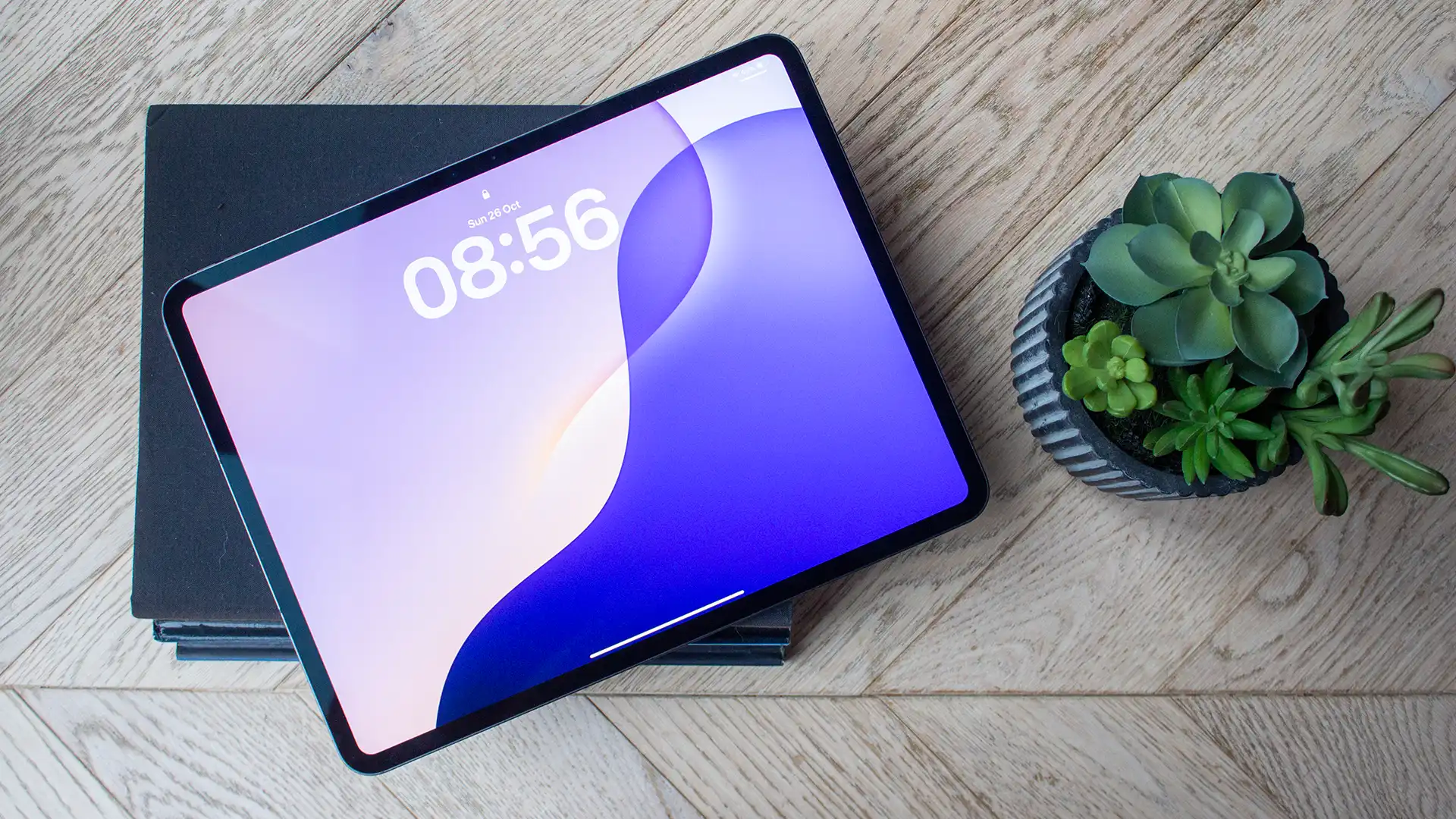
The iPad Pro has long suffered from an identity crisis. Apple kept throwing increasingly powerful chips into its premium tablet while iPadOS struggled to take advantage of all that horsepower. Year after year, reviewers wrote the same frustration: "The hardware has outpaced the software."
Not anymore.
The iPad Pro M5, released in October 2025, arrives at a pivotal moment. For the first time in the iPad Pro's history, the software actually deserves the hardware. iPadOS 26 finally unleashes what these machines can do, transforming the iPad Pro from an overpowered content consumption device into a legitimate productivity powerhouse.
But here's the uncomfortable question: Does that make the M5 upgrade worth it if you already own an M4 model? Let's find out.
WHAT'S NEW: MORE THAN JUST A CHIP REFRESH
At first glance, the M5 iPad Pro looks like a minor spec bump. Same design. Same display technology. Same cameras. Just a new chip inside, right?
Actually, Apple made several significant changes that add up to more than the sum of their parts.
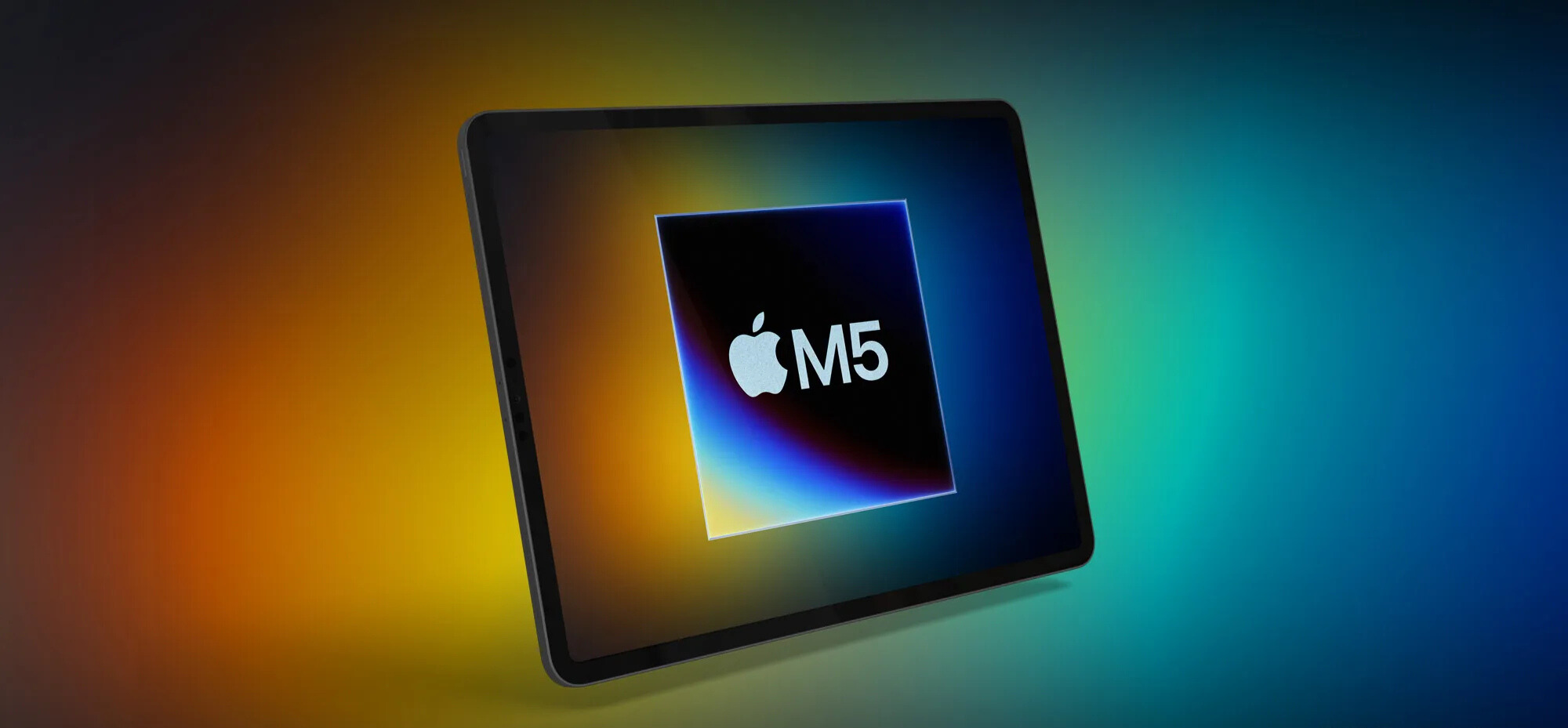
The M5 Chip: AI Performance on Steroids — The M5 processor brings substantial improvements, particularly for AI workloads: 3.5x faster AI performance compared to M4, 5.6x faster AI performance compared to M1, next-generation GPU with Neural Accelerator in each core, third-generation ray-tracing engine, and up to 1.5x faster 3D rendering with ray tracing.
In real-world testing, apps like Draw Things (AI image generation) completed tasks in half the time of the M4. That's not a minor improvement — that's game-changing for professionals using AI tools.
Memory and Storage Upgrades — Apple increased base configuration RAM by 50%. Entry-level models now ship with 12GB RAM (up from 8GB), higher configurations offer 16GB RAM with larger storage options, and PCIe Gen 5 storage delivers twice the speed of the previous generation. The RAM increase is crucial for iPadOS 26's improved multitasking, which can now keep many app windows open simultaneously without aggressively killing background processes.
Apple's Custom Wireless Chips — The M5 iPad Pro debuts Apple's C1X and N1 chips, replacing Qualcomm (cellular) and Broadcom (Wi-Fi/Bluetooth) components. This brings Wi-Fi 7 support for future-proof connectivity, improved 5G performance, and better power efficiency from integrated Apple silicon. Early testing shows mixed cellular results — download speeds were slightly slower in some tests, but upload speeds improved significantly.
Fast Charging Finally Arrives — The M5 iPad Pro supports fast charging: 0-50% in 35 minutes with appropriate adapter. This is a meaningful improvement over previous models' charging speeds.
PERFORMANCE: OVERKILL MEETS PURPOSE
The M5 iPad Pro posted the highest tablet scores ever recorded on Geekbench 6: single-core 4,144, multi-core 16,503. That's 12% faster than M4 in CPU tasks, with GPU performance gains even more dramatic. It outperformed not just other tablets but also many full laptops, including the Microsoft Surface Pro and even some MacBook Pro M4 models in certain tests.
For typical users, the difference between M4 and M5 is imperceptible. Apps launch instantly on both. Web browsing is smooth on both. For professionals, the M5 shines in specific scenarios: video editors see roughly 20% faster export times, graphic designers notice smoother complex vector handling, 3D artists benefit from dramatically improved ray-tracing performance, and AI/ML developers see substantial improvements in model training and inference.
Thermal Management: Still Not Perfect — Despite the impressive performance, thermal management remains a concern. The device heats up noticeably under sustained load, with temperatures exceeding 40C on the rear during intensive tasks. Performance throttles 20-30% in extended stress tests. This isn't unique to the M5 — it's a physics problem with thin tablets.
DISPLAY: STILL BEST-IN-CLASS OLED
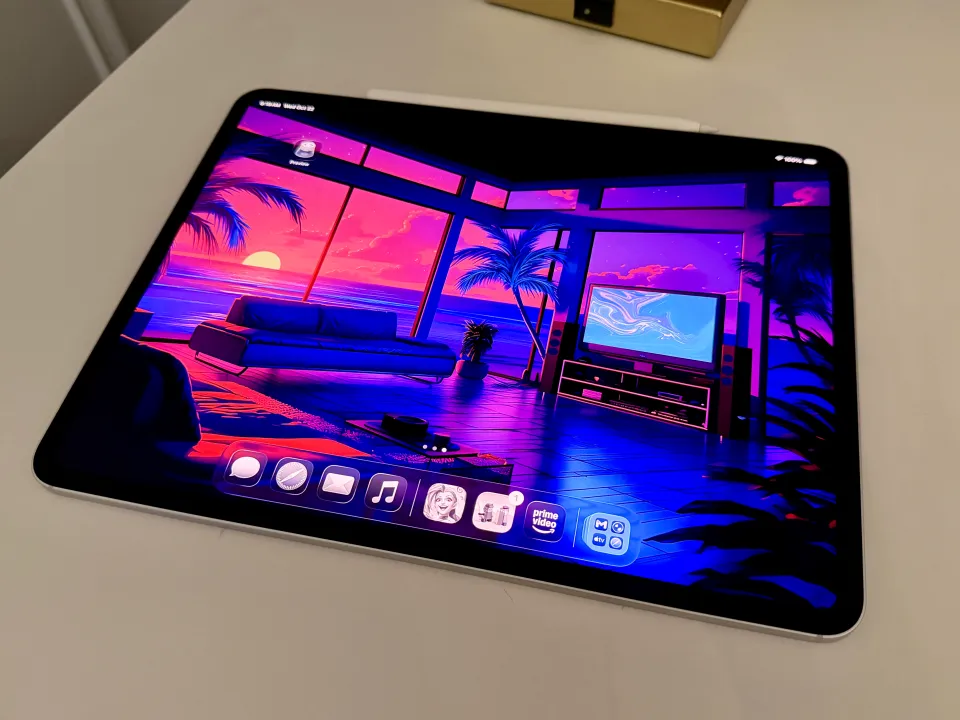
The M5 iPad Pro retains the stunning Tandem OLED display introduced with the M4 generation. The 11-inch model offers 2,420 x 1,668 resolution at 267 PPI, while the 13-inch delivers 2,752 x 2,064 at 264 PPI. Both feature 120Hz ProMotion refresh rate, 1,000 nits sustained brightness, 1,600 nits peak HDR brightness, True Tone, and P3 wide color gamut with anti-reflective coating.
The display remains the iPad Pro's killer feature. Those deep blacks, vibrant colors, and HDR performance make everything from photo editing to movie watching an absolute joy.
iPADOS 26: THE SOFTWARE FINALLY CATCHES UP
This is the real story of the M5 iPad Pro. Not the chip. Not the display. The software.
iPadOS 26 brings transformative improvements: Stage Manager feels genuinely useful now, with support for more simultaneous windows and smoother transitions. The Files app finally approaches macOS Finder functionality. More developers are creating apps that take full advantage of the iPad Pro's capabilities. Apple Intelligence integration feels natural and useful rather than tacked-on.
The remaining limitations persist — still no full external monitor support, no proper terminal access for developers, some professional workflows remain Mac-only, and app availability still lags behind macOS. The gap is closing, but the iPad Pro isn't a complete MacBook replacement for everyone.
CAMERAS: UNCHANGED (AND THAT'S FRUSTRATING)
Apple made zero changes to the camera system: 12MP wide rear with adaptive True Tone flash, 12MP ultra-wide front with Center Stage. Both remain perfectly serviceable, but it's disappointing that Apple didn't upgrade to the new 18MP Center Stage front sensor debuted on the iPhone Air and iPhone 17 series.
BATTERY LIFE: EXCELLENT AS EXPECTED
Both models deliver up to 10 hours of web browsing or video playback. Combined with fast charging support, battery anxiety essentially disappears with the iPad Pro.
THE ACCESSORY SITUATION: EXPENSIVE BUT ESSENTIAL
The Magic Keyboard ($299 for 11-inch, $349 for 13-inch) transforms the iPad Pro into a laptop alternative. The Apple Pencil Pro ($129) remains the gold standard for stylus input. But the total cost reality is steep — a fully-loaded 11-inch with accessories runs $2,227, while the 13-inch hits $2,477. That's MacBook Pro territory.
WHO SHOULD BUY THE IPAD PRO M5?
Buy it if you're upgrading from M1 or earlier (the performance and OLED display gains are substantial), if you're a professional creative, a first-time iPad Pro buyer, or if you use AI-powered creative tools.
Skip it if you own an M4 (improvements are real but marginal), if you primarily consume content (iPad Air M3 costs $400-$600 less), if your budget is tight, or if you need a true laptop replacement requiring macOS-specific apps.
THE VERDICT
The iPad Pro M5 is the best tablet money can buy. Full stop. The display is stunning, performance is absurd, build quality is impeccable, and for the first time, the software actually feels worthy of the hardware.
But "best ever" doesn't automatically mean "worth upgrading." For M4 owners: skip it. For M1/M2/M3 owners: consider it if the OLED display or AI performance improvements genuinely benefit your workflow. For first-time buyers: absolutely get the M5.
The iPad Pro M5 is an incredible product that doesn't need to exist annually. Apple should move to a two-year refresh cycle, allowing software to catch up to hardware and giving users meaningful reasons to upgrade. Until then, enjoy whichever iPad Pro you own. They're all fantastic.
Related Articles

MacBook Neo Review: The Laptop That Changes Everything
Apple's $599 MacBook Neo packs the A18 Pro chip from the iPhone 16 Pro into a beautifully built, completely fanless laptop that outperforms flagships from two years ago. It's the most important — and most accessible — Mac in years.

Best Tablets for 2026: Complete Buying Guide and Top Picks
From Budget-Friendly Fire Tablets to Premium iPads — Find Your Perfect Slate. We've tested and reviewed the best tablets across every price point.

Apple Watch Ultra 3 Review: The Ultimate Adventure Companion Evolves
Apple refines the Ultra line with meaningful upgrades including a brighter display, faster S10 chip, and exceptional battery life that justify the premium price tag.
Apple MacBook Pro M4: The Laptop That Ran Out of Competition
The most capable laptop Apple has ever shipped — three chips, 128GB unified memory, 24-hour battery, Thunderbolt 5, and on-device AI that never leaves your device.